 العربية
 Do you wake up dreading the heavy pressure in your pelvis that just won’t go away? You aren’t alone. Many women suffer in silence, dismissing the debilitating discomfort as just “bad periods,” but deep down, you know this constant exhaustion and agony isn’t normal.
The good news is that understanding the root cause is the first step toward reclaiming your life from this silent struggle. In this guide, we will dive deep into what does fibroid pain feel like, exploring the specific sensations, why they happen, and how you can treat them effectively without losing your uterus.
What Does Fibroid Pain Feel Like?
When patients ask Dr. Samir Abdel Ghaffar about their symptoms, the most common question is about the nature of the discomfort. The truth is, fibroid pain varies significantly from woman to woman. It largely depends on the location, size, and number of the leiomyomas (the medical term for these noncancerous growths).
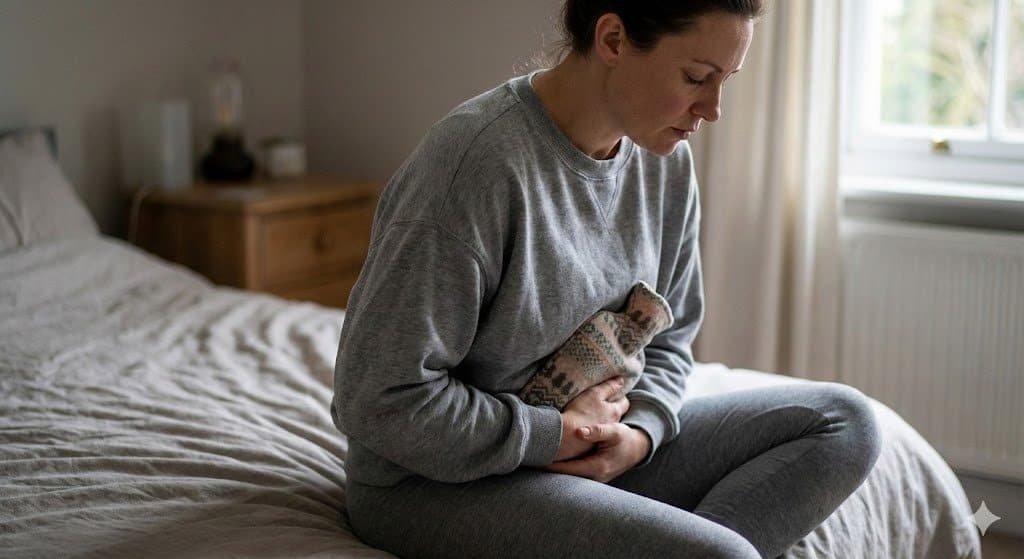
For some, it is a persistent, dull ache in the lower abdomen that feels like a heavy weight dragging you down. It’s not necessarily sharp, but it is always there, creating a sense of fullness or bloating that doesn’t improve with bathroom visits.
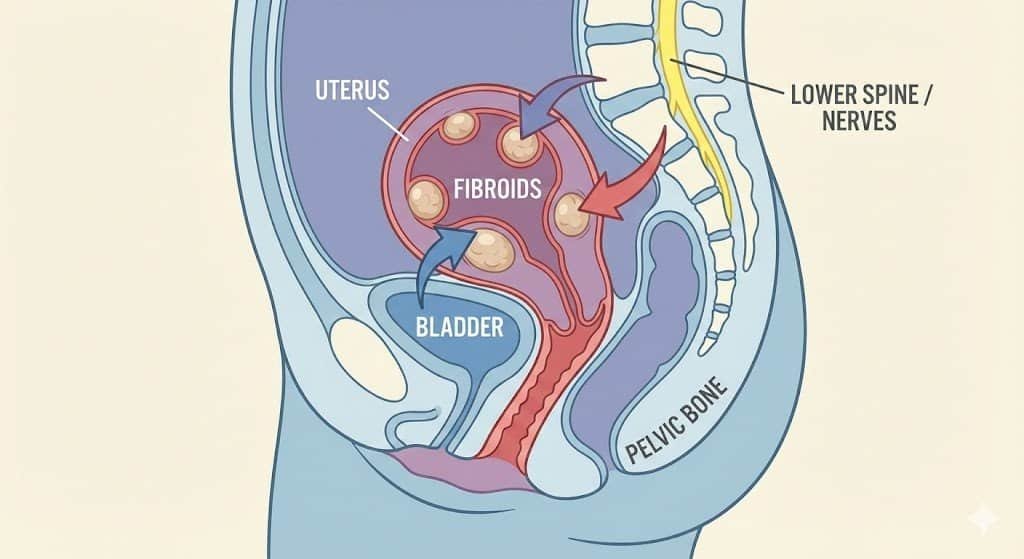
For others, the experience is far more acute. You might feel sudden, sharp pains that radiate through your pelvis and into your legs. This often happens if a fibroid is pressing on a nerve, specifically the sciatic nerve, causing sensations that mimic sciatica.
The Intensity of the Pain
The intensity of the pain can fluctuate throughout your cycle. While many assume fibroids only hurt during menstruation, the pressure can actually be chronic. The discomfort might spike during your period, causing debilitating cramps that are far worse than typical menstrual cramping. These aren’t just “bad cramps”; they are often accompanied by heavy bleeding and the passing of large clots, leaving you feeling drained and suffering from fatigue.
Furthermore, if the fibroids are located near the spine, you might experience chronic lower back pain that no amount of stretching seems to fix. If they press on the bladder, the “pain” might manifest as a constant, urgent need to urinate, or even difficulty emptying your bladder completely.
Types of Uterine Fibroids and Their Impact on Pain
To truly understand what you are feeling, you need to know which types of fibroids you might have. The location within the uterus dictates the symptoms.
1. Subserosal Fibroids
These grow on the outside of the uterus. Because they have room to expand outward, they often don’t cause heavy bleeding. Instead, they cause bulk symptoms. As they grow, they press on surrounding organs like the bladder or rectum. The symptom-causing issue here is usually pressure rather than cyclic cramping.
2. Intramural Fibroids
These develop within the muscular wall of the uterus. They are the most common type. As they expand, they make the uterus feel larger than normal, which can cause general abdominal bloating and significantly heavier periods.
3. Submucosal Fibroids
Growing just underneath the uterine lining, these are the least common but often the most problematic regarding blood loss. Even small submucosal fibroids can cause severe, prolonged menstrual bleeding and intense cramping as the uterus tries to expel the obstruction.
4. Pedunculated Fibroids
These grow on a stalk (peduncle) either inside or outside the uterus. If the stalk twists, it cuts off the blood supply to the fibroid, causing sudden, excruciating, and sharp pain that requires immediate medical attention.
Which Size of Fibroid is Dangerous?
A common misconception is that small fibroids are safe and huge ones are dangerous. In reality, fibroids’ size matters less than their location and growth rate. A pea-sized fibroid inside the uterine cavity (submucosal) can cause life-altering anemia due to heavy bleeding, while a grapefruit-sized fibroid on the outside might only cause a “pooch” in the belly.
However, rapid growth is a sign that needs evaluation. Generally, fibroids range from less than 1 cm to over 20 cm.
- Small (less than 5 cm): Often asymptomatic but can cause bleeding if submucosal.
- Medium (5 cm – 10 cm): Likely to cause pelvic pressure and visible abdominal swelling.
- Large (over 10 cm): Can compress the lungs or kidneys, leading to more systemic issues.
You should consult a doctor immediately if your abdomen looks like you are in the second trimester of pregnancy or if the growth happens very suddenly.
How Do I Know If It’s Fibroid Pain?
Distinguishing uterine fibroid pain from other conditions like endometriosis or ovarian cysts can be tricky. Here are key indicators that point toward fibroids:
- Pattern of Bleeding: Fibroids typically cause prolonged, heavy periods rather than just irregular spotting.
- Pressure vs. Pain: Fibroids often create a sensation of heaviness or a “mass” in the belly, whereas cysts tend to cause sharper, more localized pain on one side.
- Relief Measures: If standard heating pads and over-the-counter medications provide zero relief, and the pain is accompanied by a frequent urge to pee, it is likely structural—i.e., fibroids.
Signs of Fibroids Breaking Down (Degeneration)
Sometimes, a fibroid outgrows its blood supply and begins to die. This is called degeneration. The symptoms include:
- Sudden, severe localized pain.
- Low-grade fever.
- Tenderness in the abdomen.
- This pain typically lasts for a few days to a couple of weeks and then subsides.
Fibroid Cancer Symptoms
Many women worry about cancer. It is crucial to know that leiomyomas are almost always noncancerous. Cancerous fibroids, known as leiomyosarcoma, are extremely rare (occurring in less than 1 in 1000 cases).
Symptoms that might suggest malignancy (though still rare) include:
- Rapid growth of the fibroid after menopause.
- Bleeding after menopause.
- Pain that is unresponsive to standard management.
If you are post-menopausal and experiencing new growth or pain, Dr. Samir Abdel Ghaffar advises seeking a thorough evaluation immediately.
Treatment of Fibroid: Exploring Your Options
Historically, the only answer doctors gave to “how to treat fibroids” was a hysterectomy (removal of the uterus). Fortunately, medicine has advanced.
Traditional Surgical Options:
- Hysterectomy: Complete removal of the uterus. This is a major surgery with a long recovery time (6-8 weeks) and results in permanent infertility.
- Myomectomy: Surgical removal of the fibroids only. While it preserves the uterus, there is a risk of blood loss, scar tissue, and fibroid recurrence.
Medical Management:
- Hormonal Therapy: Birth control pills or GnRH agonists can help manage symptoms like bleeding, but they do not remove the fibroids. Once you stop the medication, symptoms usually return.
Treatment of Fibroid Without Surgery: The Gold Standard
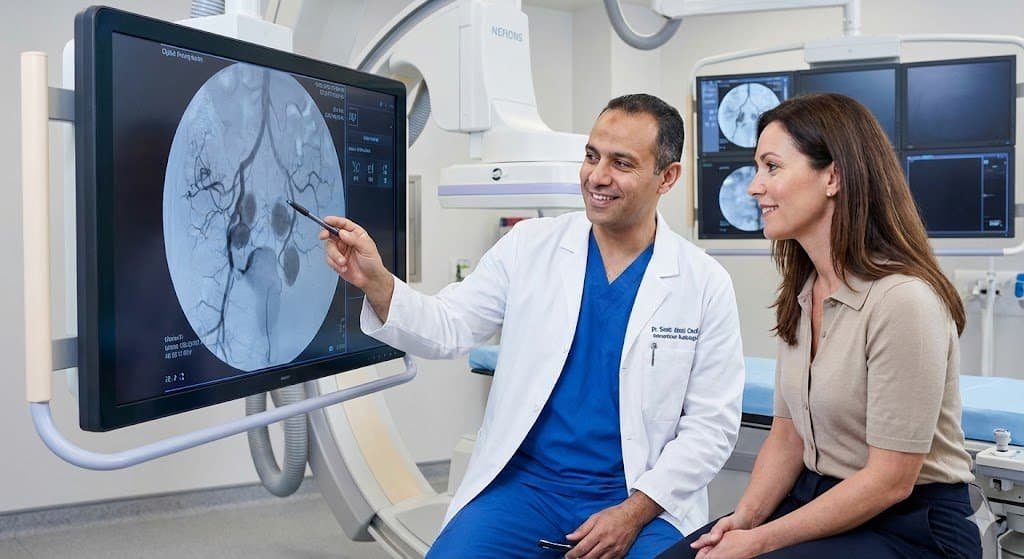
This is where Dr. Samir Abdel Ghaffar specializes. You do not need open surgery to get your life back. The most effective, modern treatment for uterine fibroids is Uterine Artery Embolization (UAE), also known as UFE.
What is Uterine Artery Embolization?
It is a minimally invasive procedure performed by an interventional radiologist. Instead of cutting open the abdomen, Dr. Samir inserts a tiny catheter through a pinhole in the wrist or groin. This catheter is guided to the arteries supplying blood to the fibroids. Tiny particles are injected to block this blood supply.
Why Choose UAE/UFE?
- Shrinks Fibroids: Deprived of blood, the fibroids shrink and die over time.
- Preserves the Uterus: Unlike hysterectomy, you keep your reproductive organs.
- Short Recovery: Most women go home the same day or the next morning and return to daily life within a week.
- No Surgical Scars: No large incisions means no ugly scarring.
- High Success Rate: It is effective for treating multiple fibroids at once, regardless of their location.
This procedure directly addresses the symptom-causing issues—stopping the heavy bleeding and relieving the bulk pressure—without the trauma of surgery.
How to Deal with Fibroids During Pregnancy?
Discovering you have fibroids during pregnancy can be scary, but most women go on to deliver healthy babies. However, fibroids can cause pain during pregnancy, a condition often called “Red Degeneration.”
Management Tips:
- Rest: Bed rest is often prescribed to reduce strain.
- Hydration: Drinking plenty of water helps manage pain and prevents contractions.
- Safe Pain Relief: Acetaminophen (Tylenol) is typically safe, but always check with your obstetrician.
- Monitoring: Regular ultrasounds are needed to monitor the size and position of the fibroids to ensure they don’t block the birth canal.
Frequently Asked Questions (FAQs)
Here, we answer the most common questions patients ask Dr. Samir regarding their experience with fibroids.
Can fibroids cause coughing?
Directly, no. However, if a fibroid is massive (large subserosal type), it can push the diaphragm upwards, compressing the lungs. This might cause shortness of breath or a dry cough due to the pressure, though this is rare.
Can uterine fibroids cause acne?
Fibroids themselves don’t cause acne. However, both fibroids and acne can be driven by hormonal imbalances, specifically estrogen dominance. So, while one doesn’t cause the other, they often coexist in the same hormonal environment.
What can be mistaken for fibroid pain?
Conditions often confused with fibroids include:
- Endometriosis (lining growing outside the uterus).
- Adenomyosis (lining growing into the muscle wall).
- Ovarian cysts.
- Irritable Bowel Syndrome (IBS), causing abdominal cramping.
- Pelvic Inflammatory Disease (PID).
How many days does fibroid pain last?
This depends on the cause.
- Chronic pressure: Can be daily and continuous.
- Period-related pain: Usually lasts 5-7 days during the menstrual cycle.
- Degeneration pain: Can last from a few days to 2 weeks.
Can a baby survive with a fibroid in the womb?
Yes, absolutely. The vast majority of pregnancies with fibroids result in healthy babies. The risk depends on the location; for example, if the fibroid is near the placenta, it requires closer monitoring.
How to get instant relief from fibroid pain?
For immediate (temporary) relief:
- Use a heating pad on your lower belly or back.
- Take over-the-counter anti-inflammatory medications (like Ibuprofen) if advised by your doctor.
- Lie down with a pillow under your knees to relieve pelvic tension.
- Note: For permanent relief, medical intervention like UAE is necessary.
At what age do fibroids usually develop?
They most typically develop during a woman’s reproductive years, specifically between the ages of 30 and 50. They are less common in women under 20 and tend to shrink after menopause due to dropping hormone levels.
How to tell if fibroids are getting worse?
Signs of progression include:
- Periods becoming heavier or lasting longer (e.g., more than 7 days).
- The need to urinate becoming more frequent (waking up multiple times at night).
- The abdomen appearing visibly larger.
- New onset of constipation due to rectal pressure.
Can fibroids cause diarrhea?
While constipation is more common due to pressure on the rectum, some women experience diarrhea. This is often due to the release of prostaglandins (chemicals that cause cramping) during heavy periods, which affect the bowels as well as the uterus.
Can fibroids cause fever?
Generally, no. However, if a fibroid is degenerating (breaking down rapidly) or twisting (torsion), it can cause a low-grade fever accompanied by severe pain. This requires medical assessment to rule out infection.
Taking the Next Step
Living with constant discomfort, worrying about heavy bleeding, and planning your schedule around your periods is exhausting. But you do not have to just “live with it,” nor do you have to surrender to major surgery.
Understanding what does fibroid pain feel like is your first step toward validation. Your pain is real, and it is treatable. Dr. Samir Abdel Ghaffar offers a safe, effective, and non-surgical path to recovery through Uterine Artery Embolization.
Imagine a life without the fear of leaking, without the heavy drag in your pelvis, and without the monthly agony. It is possible. 🌟
Contact Dr. Samir Abdel Ghaffar Today
Take control of your health. For a consultation regarding the non-surgical treatment of fibroids and adenomyosis, please contact us:
1. For Patients in London, UK:
- Clinic Number: 00442081442266
- WhatsApp: 00447377790644
2. For Patients in Egypt:
- Cairo Booking Number: 00201000881336
- WhatsApp: 00201000881336
Your journey to a pain-free life starts with one call. Don’t let fibroids dictate your future any longer.